
OCD
OCD is not about personality or preference. It is a pattern the brain gets stuck repeating.
OCD Treatment
Obsessive-compulsive disorder (OCD) is marked by intrusive, unwanted thoughts and repetitive behaviors or mental rituals meant to reduce anxiety. The relief is brief, and the ritual reinforces the cycle, so symptoms grow stronger over time.
Living with OCD is exhausting and disruptive. At Reyou we treat OCD with ketamine therapy at our Howell Township and South Plainfield clinics in New Jersey, and at home in Bergen County, Manhattan, and North Brooklyn.
How We Approach OCD at Reyou
OCD is best understood as rigidity in the brain circuits for threat detection, habit formation, and error signaling. The mind locks into repetitive loops that willpower alone cannot interrupt.
We approach OCD with careful evaluation, clinical oversight, and respect for how hard these patterns are to break.

Treatment recommendations are individualized. We take into account symptom severity, treatment history, medical considerations, and personal goals when helping patients explore their options.
How OCD Affects the Brain & Daily Life
OCD shows up differently from person to person. Some experience intrusive thoughts about contamination or morality. Others feel a need for symmetry, order, or certainty that can consume hours of the day.
What makes OCD especially hard is that you often know the thoughts are irrational, yet cannot stop responding to them. That gap between insight and action is not a failure of willpower. It is the condition itself.
Is This the Right Approach for Me?
This approach may be a good fit if:
- Your OCD has persisted despite medication and therapy
- You want something different from traditional antidepressants
- You want medically supervised, individualized care
- You are open to a neuroplasticity-based treatment
When Depression Is Also Present
Some people with OCD also have significant depression or a history of antidepressants. In those cases Spravato may be an option, and we discuss it during evaluation.


If you have managed OCD for years, skepticism about something new is understandable, especially when past treatments brought limited relief.
Ketamine for OCD is considered when standard treatments and therapy have not worked. It is not a first-line treatment, and it is not right for everyone.
What we offer
Ketamine and TMS therapy both involve perceptual shifts and distance from rigid thoughts and emotions — not losing control, but breaking free from stuck patterns. At Reyou, this unfolds in a calm, medically supervised environment where preparation, comfort, and integration matter as much as the treatment.

Ketamine disrupts the rigid neural networks behind repetitive OCD thoughts and behaviors, quieting rumination and compulsion circuits and creating a more flexible brain state. Some patients can step outside entrenched patterns with more distance. IV ketamine is administered in-clinic under medical supervision within a structured plan. Preparation, safety, and follow-up are central.

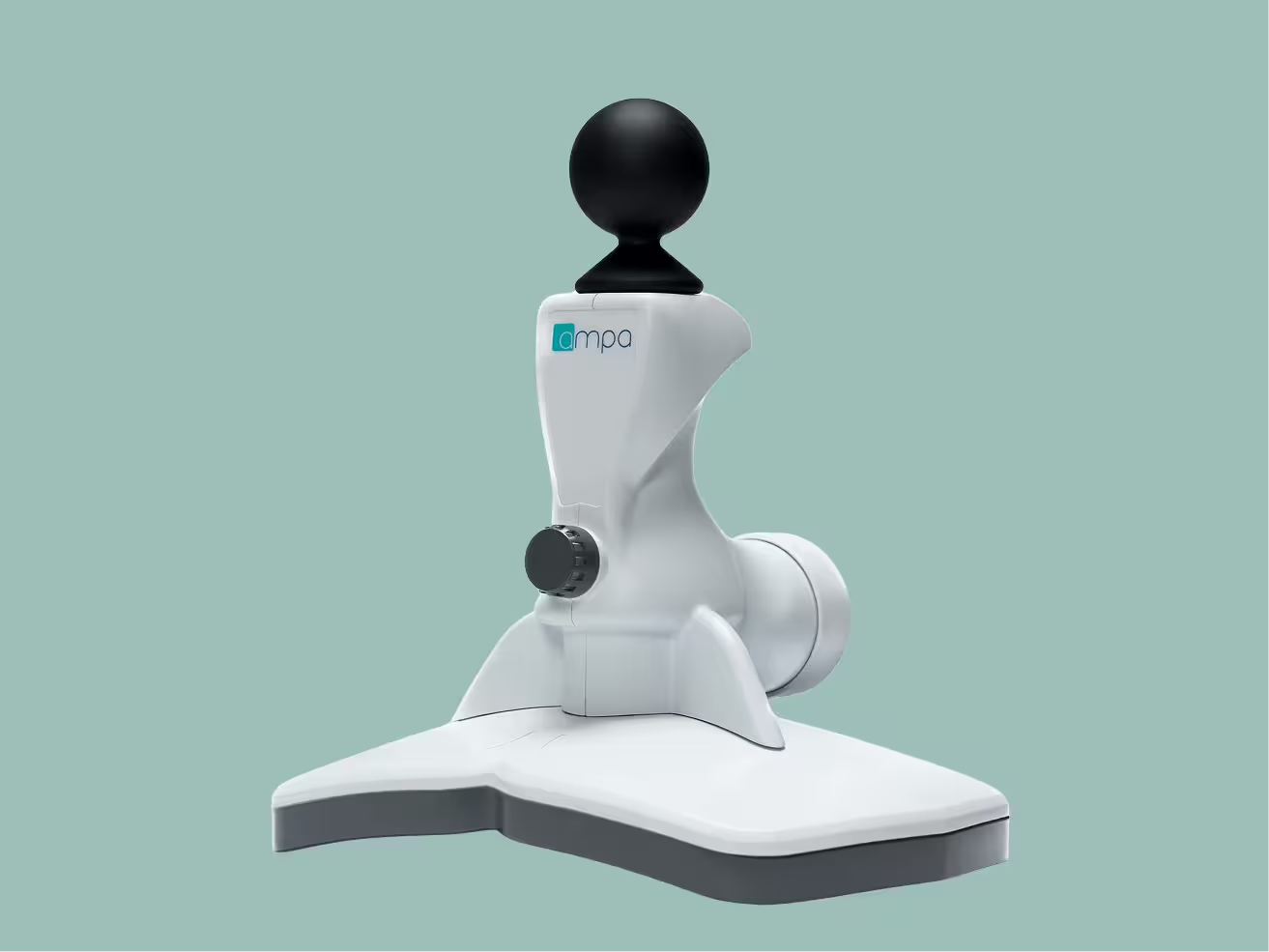
Many people with OCD also live with depression. In those cases TMS may be an option. TMS is FDA-cleared for depression in adults who have not gotten enough relief from antidepressant medication. At Reyou, TMS is offered for the depression that often comes with OCD, not for OCD itself. Usually covered by insurance. Available at South Plainfield.
What you can do
Help Someone You Love
You can see it. The light behind their eyes has dimmed, and what was supposed to help hasn’t. When someone we love suffers, we suffer too.
Think of a lamp covered in layers of dust. Trauma, depression, and anxiety pile on, and the light looks dimmer. But the lamp hasn’t changed. It just needs the right care to shine again.
Reyou’s treatments can help the people you care about reconnect with that light — and in doing so, make all of your lives a little brighter. Connect with us — we can help.
What patients say
“I feel like a different person than what I was 5 months ago. I feel so much happier and clearer. I also stopped picking my skin, which I didn’t think I could ever find in myself to do. Coming from someone who is very hypervigilant, I can honestly say — at Reyou, everything is safe.”
Silvia
Treated for OCD and Depression
Choosing a Path Forward
OCD can look very different from person to person. What helps one individual may not be appropriate for another.
A consultation at Reyou is a conversation, not a commitment. We take time to understand your experience, answer questions honestly, and cover cost and logistics. Then we decide next steps together.